
Restaurant and Cafe Insurance in Texas
Review insurance for your restaurant’s kitchen, customers, staff and property.
Find your food business
Choose the guide for the business you run.
Already a client? Get help with your policy.
Coverage for your kitchen, guests and staff
Start with your kitchen, guests, staff and vehicles. Insurance requirements can also come from leases, contracts, vehicles, or particular activities, so bring those details to the review.
More about restaurant coverage
Tell us about alcohol service, late hours, live entertainment, delivery, off-site catering, food trucks or concession stands. A licensed team member reviews these activities separately from a fixed counter or dining room before quoting. Do not assume they are included.
The kitchen and cooking equipment
Commercial property may help repair or replace covered kitchen equipment after a covered loss. Equipment breakdown is a separate question: ask how the quote treats mechanical or electrical failure and the equipment you rely on.
The dining room or counter
General liability may help with covered injury or property damage claims involving guests and visitors. Review customer traffic, seating, deliveries and any events alongside the policy limits and exclusions.
Food safety and what you serve
Food-related illness allegations and spoiled inventory raise different coverage questions. Ask how products liability, food contamination and spoilage are treated, including their causes-of-loss conditions, limits and exclusions.
Staff in the kitchen and front of house
Workers compensation can help with covered work-related injuries to employees. Include kitchen and serving staff, payroll by role, and any leased or outside labor so the working arrangements can be checked.
Vehicles connected to the business
Review commercial auto for business-owned vehicles and hired or non-owned auto liability for rented or employee-owned vehicles used for the business. Include deliveries and catering; liability coverage does not automatically insure damage to a vehicle.
The building, equipment, and a closure
Commercial property may protect the building, contents and tenant improvements after covered damage. Business income may help with specified lost income and expenses during a covered interruption. Check waiting periods, limits and restoration periods.
A standard general liability policy commonly excludes claims connected to serving alcohol. If you serve beer, wine, or mixed drinks, ask a licensed team member about liquor liability directly rather than assuming it is included.
Before you request a quote
What affects restaurant insurance costs?
The cost of insuring a restaurant or cafe depends on the kind of place you run, your seating or counter capacity, your hours, and whether you serve alcohol. It also depends on your kitchen equipment, your building, your payroll, and your claims history.
The coverage limits and deductibles you choose also change the price, along with whether you deliver, cater, or run more than one location. A specific review of your operation is more useful than a generic number found online.
Before you compare the price
- What your business actually does
Check that the quote reflects your real operation, dine-in, counter-service, delivery, or catering, not a generic restaurant class.
- Liquor liability, if you serve alcohol
Confirm whether liquor liability is included, added separately, or missing, since it is not automatic in a standard policy.
- Property and equipment values
Check that your kitchen equipment, build-out, and inventory are valued the same way across quotes.
- Limits and deductibles
Compare the same coverage limits and deductibles, not just the total price at the bottom of the page.
What should I have ready?
You do not need all of this ready to start the conversation.
- What kind of place you run, and your seating or counter capacity
- Whether you serve alcohol, and your TABC permit type if you already have one
- Whether you deliver, cater off-site, run a food truck or concession stand, or host entertainment or stay open late
- Your food establishment permit type and the state or local health authority that issued it
- Number of employees, their roles, and any outside or leased labor
- Whether you own or lease your building, and the age of your kitchen equipment
- Your current insurance policies, if you have them, and any past claims
- Any food safety inspection or licensing history
What does Texas require?
Texas does not set an insurance mandate for a restaurant, cafe, or similar food and drink business as such.
A fixed retail food establishment generally needs a permit from the health authority responsible for its location. That may be a city, county or public health district; DSHS issues permits in areas it regulates. Confirm the authority and permit needed for your fixed location or temporary event.
Mobile food vendors follow Texas DSHS licensing rules that began July 1, 2026. Vehicle insurance proof for a motorized food vending vehicle is a separate requirement from insuring a fixed restaurant. Include mobile work in the review.
If you serve alcohol, the Texas Alcoholic Beverage Commission requires its own permit, separate from any insurance policy. TABC also requires certain license and permit holders to post a bond, a different requirement from an insurance policy, before they can operate.
Texas does not require most private employers, including most restaurants, to carry workers' compensation insurance. The Texas Department of Insurance describes it as elective for most businesses, though certain contracts and circumstances can require it.
Texas DSHS permit and mobile-food guidance, checked October 7, 2026; Texas Alcoholic Beverage Commission and Texas Department of Insurance guidance.
Talk with our Texas team
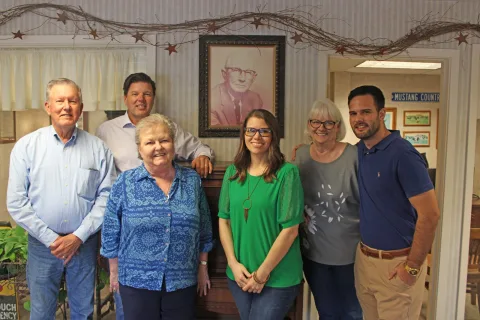
Stover & Crouch is an independent Texas agency, established in 1920. A licensed team member reviews your operation before quoting. We explain available insurance options, limits and remaining questions before you choose.
A website request does not bind, change, cancel, reinstate, or confirm coverage.